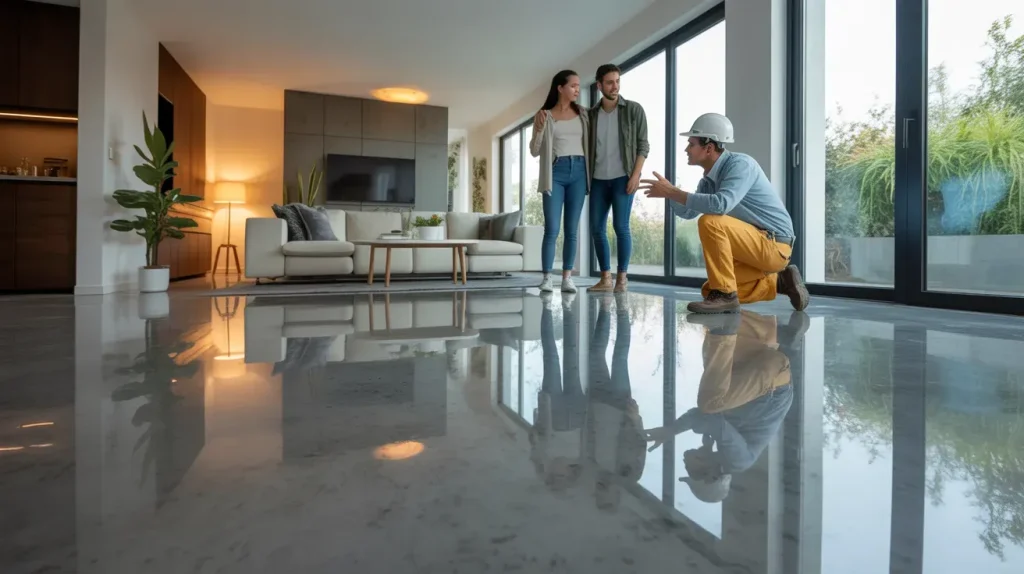
Homeowners today are looking for flooring options that are beautiful, durable, and easy to maintain. A polished concrete floor residential perfectly meets these needs. This modern flooring solution offers a sleek, contemporary look while providing exceptional strength and low maintenance requirements. Many families are choosing polished concrete for living rooms, kitchens, hallways, and even bedrooms because of its timeless appeal and practical benefits.
Benefits of Installing Polished Concrete Residential Floors
Polished concrete residential floors are gaining popularity for good reason. They are extremely durable and can handle heavy foot traffic without showing signs of wear. Unlike carpet or hardwood, polished concrete does not scratch easily and resists stains when properly sealed.
These floors also reflect natural light, making rooms feel brighter and more spacious. This light-reflecting quality can help reduce electricity bills by decreasing the need for artificial lighting during the day. Additionally, polished concrete is naturally cool in summer and can be paired with radiant heating systems for comfortable warmth in winter.
Long-Term Cost Savings
One of the biggest advantages is the low cost of ownership. Residential concrete maintenance is simple and inexpensive compared to other flooring types. Regular sweeping and occasional mopping are usually enough to keep the surface looking new for many years.
Interior Residential Concrete Floors for Modern Homes
Interior residential concrete floors work beautifully in almost any room. In open-concept homes, they create a seamless flow from the living area to the kitchen and dining space. The smooth, level surface is ideal for families with young children or elderly members because it eliminates tripping hazards found in tile or wood floors.
Homeowners love the versatility of polished concrete. It can be left in its natural gray tone for a minimalist industrial look or customized with stains, dyes, and patterns to match any interior design style. From soft beige tones to bold charcoal or even decorative aggregate exposure, the design possibilities are nearly endless.
Design Options and Customization
You can achieve different looks by choosing the level of polish, from a satin finish to a high-gloss mirror-like shine. Adding color through stains or dyes allows you to create warm earth tones or dramatic contrasts that complement your furniture and decor.
The Process of Residential Concrete Polishing
Residential concrete polishing involves several careful steps to achieve that signature glossy finish. First, the existing concrete slab is ground down using progressively finer diamond abrasives. This process removes imperfections and creates a smooth, dense surface.
After grinding, the floor is treated with a densifier that hardens the concrete and prepares it for polishing. Final polishing stages bring out the deep shine and clarity that homeowners desire. The entire process is dust-free when done by professionals and can usually be completed in a few days, depending on the size of the home.
Tips for a Successful Polishing Project
Proper preparation is essential. Any cracks or damage should be repaired before polishing begins. Choosing an experienced team ensures the best results and helps avoid common mistakes that can affect the final appearance. It is also important to discuss your expectations regarding shine level and color early in the process.
Polished Concrete for Residential Concrete Driveways
While most people think of polished concrete indoors, residential concrete driveways can also benefit from polishing or similar surface treatments. A polished or densified driveway surface resists oil stains, tire marks, and weathering much better than standard concrete.
Many homeowners now choose a lightly polished finish for their driveways to create a clean, modern entrance that complements their home’s exterior. This approach not only looks attractive but also makes snow removal and cleaning much easier throughout the year.
Preparing Your Driveway for Polishing
Before polishing a driveway, the concrete must be properly cured and free from major cracks. Professionals often recommend applying a high-quality sealer after polishing to protect against oil and water penetration, especially in areas with heavy vehicle traffic.
Residential Concrete Maintenance Guide
Proper care keeps polished concrete residential floors looking their best for decades. Daily maintenance is straightforward regular sweeping or vacuuming removes dirt and grit that could scratch the surface. A damp mop with a pH-neutral cleaner is recommended for deeper cleaning.
Avoid harsh chemical cleaners that can damage the sealer. Reapplying a quality concrete sealer every few years provides extra protection against stains and moisture. With consistent residential concrete maintenance, your polished floors will continue to shine and perform well for 20 years or more.
When Residential Concrete Removal Becomes Necessary
Sometimes older concrete surfaces are too damaged or outdated for polishing. In these cases, residential concrete removal may be the best option before installing new polished concrete. Professional removal ensures the old slab is completely cleared without damaging plumbing, electrical lines, or the foundation.
After residential concrete removal, contractors can prepare the subfloor properly and pour fresh concrete optimized for polishing. This gives homeowners a clean slate and the opportunity to create exactly the floor they envision.
Signs You May Need Concrete Removal
Look for large cracks, uneven surfaces, or extensive staining that cannot be fixed through polishing alone. In such situations, complete removal followed by a new pour often provides better long-term results than attempting to repair heavily damaged concrete.
Is Polished Concrete Right for Your Home?
Polished concrete works well for most residential applications, but it is especially ideal for homes with open floor plans, modern or industrial design themes, or families that want low-maintenance flooring. It is pet-friendly, allergy-friendly, and does not harbor dust or mold like carpet can.
However, in very cold climates without radiant heating, some homeowners add area rugs in living spaces for extra warmth underfoot. With the right planning and professional installation, a polished concrete floor residential solution can dramatically improve both the look and functionality of your home.
Conclusion
A polished concrete floor residential offers the perfect balance of beauty, strength, and practicality that modern homeowners demand. From stunning interior residential concrete floors to durable residential concrete driveways, this flooring choice delivers long-term value and easy care.
Whether you are building a new home or renovating an existing one, investing in quality residential concrete polishing creates a floor that will look beautiful for many years with minimal effort. Take time to work with experienced professionals who understand residential applications to achieve the best possible results.
Ready to transform your home with elegant and durable flooring? Contact a trusted specialist in polished concrete today and discover how this versatile option can elevate your living space.
Frequently Asked Questions
Q1: How long does a polished concrete floor residential last?
With proper care, a polished concrete floor residential can easily last 20 to 30 years or more while maintaining its shine and durability.
Q2: Is residential concrete maintenance difficult?
No. Residential concrete maintenance is very simple and requires only regular sweeping and occasional mopping with neutral cleaners.
Q3: Can polished concrete be used for residential concrete driveways?
Yes. Many homeowners enhance residential concrete driveways with polishing or densifying treatments for better stain resistance and a cleaner appearance.
Q4: What is involved in residential concrete removal?
Residential concrete removal involves breaking up and clearing out old damaged concrete so a new slab can be poured and polished.
Q5: Are interior residential concrete floors suitable for bedrooms?
Yes. interior residential concrete floors work well in bedrooms, especially when combined with area rugs for added warmth and comfort.
