Most homeowners think flooring is just about looks. But the floor you choose affects how your home feels, how easy it is to clean, and even how much your property is worth. Interior residential concrete floors have quietly become one of the most popular flooring choices across the country. And honestly, it makes a lot of sense once you understand what they can actually do.
Why Interior Residential Concrete Floors Are Worth Considering
Concrete is not just a garage material anymore. In the past decade, homeowners have started bringing it inside. Living rooms, kitchens, bedrooms, basements you name it. The reason is simple. Concrete offers something that tile, hardwood, and laminate usually cannot: a surface that is genuinely built to last.
Furthermore, concrete works with modern design. It pairs naturally with open-plan layouts, industrial aesthetics, and minimalist decor. It does not compete with the room. Instead, it becomes the room.
So what makes concrete stand out compared to other flooring options? Let’s break it down.
| Flooring Type | Lifespan | Maintenance Level | Cost Over 10 Years |
| Hardwood | 20–25 years | High (refinishing needed) | High |
| Tile | 15–20 years | Medium | Medium |
| Laminate | 10–15 years | Low to Medium | Low–Medium |
| Concrete (Polished) | 30+ years | Low | Low |
As the table shows, concrete wins on long-term value. That is hard to ignore.
The Case for Polished Concrete Residential Floors
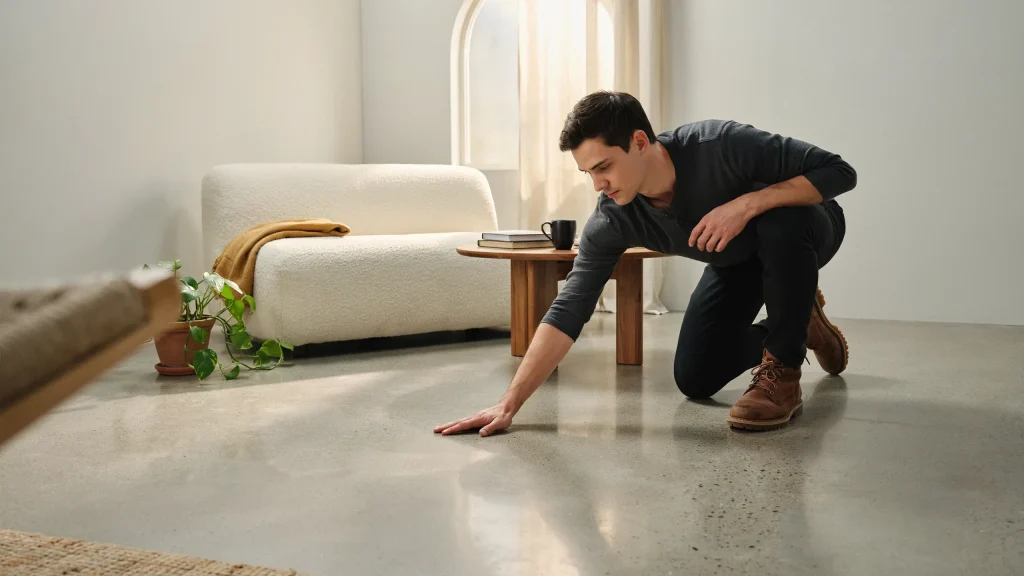
Not all concrete floors look the same. When you go with polished concrete residential floors, the result is a high-gloss, smooth surface that genuinely looks premium. The process involves grinding the concrete down with diamond tooling and then sealing it. Each pass gets finer, and the surface gets shinier.
Here is why homeowners love the polished look:
- It reflects light, which makes smaller rooms feel bigger.
- It does not absorb dust, allergens, or pet dander.
- It holds up under furniture, foot traffic, and spills.
- It works beautifully with radiant heating systems underneath.
Additionally, polished concrete does not fade over time. You will not be replacing it every decade. That peace of mind alone is worth a lot.
Staying on Top of Residential Concrete Maintenance
One of the biggest advantages of concrete is how little attention it needs. However, “low maintenance” does not mean “no maintenance.” Smart residential concrete maintenance means you protect the surface before problems show up.
Here is a simple routine that works:
- Weekly: Dry mop or dust sweep to remove grit.
- Monthly: Damp mop with a pH-neutral cleaner.
- Annually: Inspect for micro-cracks or dull spots. Reseal if needed.
- Every 3–5 years: Professional deep clean and repolish.
That is really it. Compare that to hardwood floors, which need refinishing every few years and cannot handle moisture without warping. Concrete is just easier to live with.
What Goes Into Residential Concrete Polishing
The residential concrete polishing process is not something you do with a rented machine on a weekend. It requires industrial grinders, diamond pads at multiple grit levels, and densifiers that harden the surface from the inside out.
Here is a general overview of how professionals handle it:
- Inspection — Check for cracks, moisture, and existing coatings.
- Grinding — Remove imperfections and open up the surface.
- Densifying — Apply a chemical hardener that soaks in and strengthens the slab.
- Polishing — Multiple passes with increasingly fine diamond pads.
- Sealing — Final protective coat to lock in the finish.
Each step matters. Skipping any one of them leads to a finish that looks good for six months and then starts peeling or dulling. Always hire someone who follows the full process.
Don’t Forget About Residential Concrete Driveways
Interior floors get a lot of attention, but residential concrete driveways are just as important to the overall picture. A cracked or stained driveway affects curb appeal immediately. It is literally the first thing people see.
The good news is that concrete driveways are among the most durable options available. Properly installed, a concrete driveway can last 30 to 50 years with basic care. Things to keep in mind:
- Thickness matters. A driveway should be at least 4 inches thick, ideally 6 for heavier vehicles.
- Control joints prevent cracks. These guide cracking so it happens in predictable places.
- Sealing extends life. A quality sealer applied every two to three years makes a real difference.
A matching interior and exterior concrete finish also ties the whole property together visually. Many homeowners overlook that design opportunity.
When You Need Residential Concrete Removal Near Me
Sometimes the existing slab has gone too far. Severe cracking, heaving, or major moisture damage means repair is not enough. In those cases, searching for residential concrete removal near me is the right call.
Removal is not a DIY job. It involves jackhammering the slab, breaking it into manageable pieces, and hauling it away. When hiring for removal, ask about:
- Whether they handle debris disposal.
- How they protect surrounding areas from damage.
- Whether subgrade repair is included in the quote.
Getting this part right sets you up for a clean installation afterward.
Concrete Floor Finishing Options Worth Knowing
Beyond polishing, there are several concrete floor finishing options homeowners can choose from depending on the look and budget they want.
| Finish Type | Look | Best For | Approx. Cost Range |
| Polished | High gloss, smooth | Living rooms, kitchens | $3–$8 per sq ft |
| Stained | Earthy tones, mottled | Basements, studios | $2–$4 per sq ft |
| Epoxy Coated | Solid color, durable | Garages, utility rooms | $3–$7 per sq ft |
| Exposed Aggregate | Textured, natural | Patios, entryways | $4–$9 per sq ft |
Each finish has its strengths. However, polished concrete remains the most popular for interior spaces because it holds up best over time and requires the least work to maintain.
Conclusion
If you are thinking about upgrading your home’s flooring, interior residential concrete floors deserve serious consideration. They are durable, low-maintenance, and genuinely good-looking when done right. From polishing to maintenance to driveway work, concrete gives you options that most other materials simply cannot match.
At Illice Concrete, we have been doing this work for over 22 years. We know what a quality slab looks like, and we know how to get there. If you are ready to talk through your project, reach out to us today for a free consultation.
Frequently Asked Questions
Q: How long do interior residential concrete floors last?
With proper installation and routine sealing, polished concrete floors can last 30 years or more. The slab itself can outlast the home if installed correctly.
Q: Are polished concrete floor residential options cold underfoot?
Yes, concrete can feel cool, especially in winter. However, pairing it with radiant floor heating solves this completely. Many homeowners in colder climates go this route.
Q: How often should I reseal my floors?
For most homes, resealing every two to three years is enough. High-traffic areas like kitchens may need it a bit more frequently.
Q: Can I get polished concrete floor residential work done over existing floors?
It depends on what is underneath. If there is hardwood or tile over the slab, it usually needs to come up first. A professional assessment will tell you exactly where you stand.
