
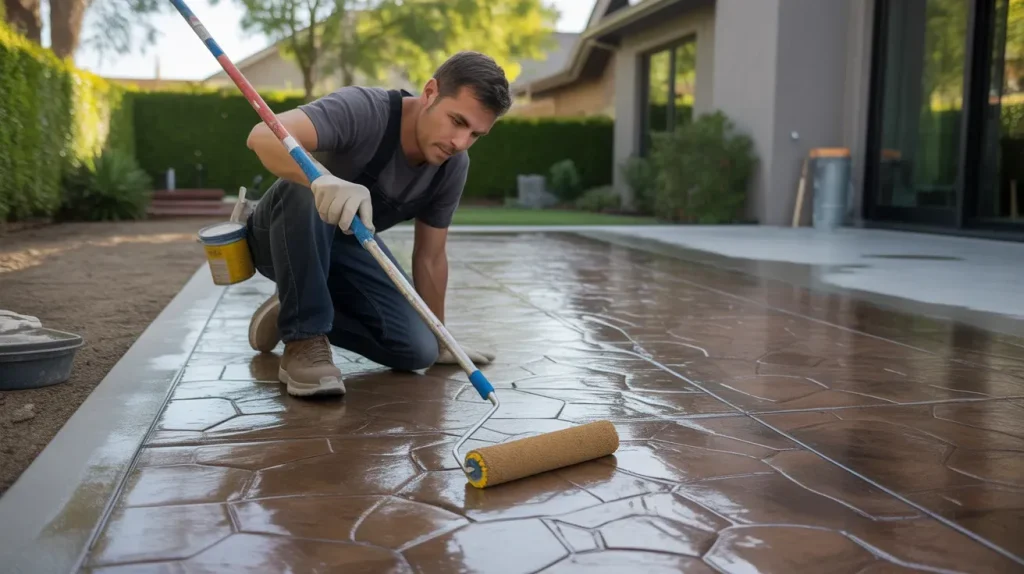
You put real money into your patio. The texture, the color, the way it pulls the whole backyard together, it looks great when it is done right. But here is something a lot of homeowners do not find out until it is too late: without the right stamped concrete patio sealer, that finish starts breaking down faster than it should. Faded color, surface flaking, stains that will not budge, these are all signs that the concrete is no longer protected. The good news is that sealing is straightforward once you know what you are looking at.
Why Stamped Concrete Patio Sealer Is the Most Important Step
Concrete is naturally porous. Without something protecting the surface, moisture gets in, and once it is in, it works against the slab from the inside. In colder climates, that means freeze-thaw cycles that crack the surface. In sunnier areas, it means UV rays slowly strip the color and dull the finish. A good sealer locks moisture out, preserves the color, and makes the whole surface easier to keep clean.
Acrylic vs polyurethane: which one to pick
Acrylic sealers are the most common choice for sealing stamped concrete patio surfaces. They are easy to apply, they enhance color well, and they come in matte or gloss. Polyurethane sealers are tougher and hold up better under heavy foot traffic. If your patio sees a lot of use, polyurethane is worth the extra cost. If it is mainly decorative, acrylic does the job cleanly.
Does the concrete stamp patio pattern matter?
It does. Deeper textured concrete stamps patio patterns hold more sealer per coat, but also show wear faster at the raised points. A high-gloss finish on a deep texture can also become slippery when wet. Talk to your installer about what finish level makes sense for the specific pattern you chose.
How to Time Your Sealing Stamped Concrete Patio Application
Timing is everything here. A newly poured patio needs to cure for at least 28 days before any sealer goes on. Going earlier traps moisture inside the slab and causes the very problems you are trying to prevent. For existing patios, the surface needs to be fully clean and completely dry before you start. Any leftover dirt, grease, or old sealer residue will stop the new coat from bonding properly.
- Pressure wash and let the surface dry for at least 24 hours
- Strip the old sealer if it is peeling or bubbling
- Apply thin, even coats; do not try to do it in one thick pass
- Let the first coat dry before adding a second
- Keep foot traffic off for at least a full day after the final coat
TIP: Apply sealer on a dry, overcast day if you can. Direct sunlight causes the product to dry too fast and can leave streaks. Rain within a few hours of application will ruin the finish before it sets.
How Often Should You Be Resealing Stamped Concrete Patio Surfaces
Most patios need resealing of stamped concrete patio work every two to three years. The exact timeline depends on sun exposure, climate, and how much the patio gets used. A simple way to check: pour a small amount of water on the surface. If it beads up, you are fine. If it soaks in, it is time to reseal. Staying on this schedule is one of the lowest-effort ways to extend the life of your patio significantly.
Sort Out Stamped Concrete Patio Repair Before You Seal
Sealing over existing damage does not fix it. It covers it temporarily and usually makes it worse over time. Any stamped concrete patio repair work, filling cracks, patching chips, and fixing flaking sections, needs to happen before a fresh sealer coat goes on. Small cracks can be filled with a color-matched patching compound. Larger structural issues or significant surface failure are worth getting a professional opinion on before you commit to a repair approach.
Working with stamped concrete patio contractors
If the repair work is beyond a basic patch job, or if you just want the sealing done properly the first time, experienced stamped concrete patio contractors are worth bringing in. They know which products hold up in your climate, they have the right equipment for an even application across a large surface, and they can catch problems early before they turn into costly fixes.
The Case for a Stamped and Stained Concrete Patio
If you are building new or considering an upgrade, a stamped and stained concrete patio gives you more depth and character than stamping alone. Staining adds translucent, layered color that works with the natural variation in the concrete rather than covering it up. The result looks closer to real stone or tile than a standard colored pour. Sealing is especially important on stained surfaces because the stain itself needs a protective barrier to stay vibrant through sun and weather exposure.
Conclusion
A beautiful patio is only as good as the protection behind it. Choosing the right stamped concrete patio sealer, applying it at the right time, and keeping up with the maintenance schedule are what separate a patio that holds up for decades from one that starts looking tired within a few years. Whether you do it yourself or bring in a contractor, getting this part right is worth every bit of the effort.
Frequently asked questions
-
How do I know when my stamped concrete patio sealer needs replacing?
Do the water test. Pour a small amount of water on the surface. If it soaks in instead of beading up, the sealer has worn down, and it is time for a fresh coat.
-
Can I seal the patio myself, or should I hire someone?
For a straightforward maintenance reseal, DIY is fine if you follow the prep steps carefully. For anything involving stamped concrete patio repair, first, or a large complex surface, a professional will get a cleaner result.
-
How long do I need to wait before sealing a new patio?
At least 28 days. The concrete needs to cure fully before sealing. Going early traps moisture inside the slab and causes surface problems down the line.
-
What makes a stamped and stained patio different from a standard one?
A standard stamped patio uses color mixed into the concrete. A stamped and stained concrete patio adds a translucent stain on top for richer, more natural-looking variation in the color, closer to the look of real stone.
-
How often should I be resealing stamped concrete patio surfaces?
Every two to three years is the general recommendation, though patios with heavy use or high sun exposure may need it more often. The water bead test is the easiest way to check.
