Hiring experienced concrete retaining wall contractors is essential when managing soil movement, elevation changes, and long-term property stability. Retaining walls are not only functional structures but also critical safety components in residential and commercial construction. According to construction industry estimates, properly engineered retaining walls can increase property usability by 20 to 30 %, especially on sloped or uneven land.
Whether supporting landscaping, protecting foundations, or enhancing outdoor design, retaining walls require expert planning, precise material selection, and professional installation. Poorly constructed walls often fail within a few years due to pressure buildup, drainage issues, or weak foundations, making contractor expertise a key factor in long-term success.
Understanding the Purpose of Concrete Retaining Walls
Concrete retaining walls are designed to resist lateral soil pressure and prevent erosion. Unlike decorative landscape features, these walls must meet structural standards that account for load, moisture, and environmental conditions.
Professional concrete retaining wall contractors assess soil composition, slope angle, and water flow before construction begins. This ensures the wall performs its structural role while maintaining durability over decades. Concrete remains the most preferred material due to its strength, adaptability, and resistance to weather-related deterioration.
Maintenance Considerations and Long-Term Performance of Retaining Walls
Beyond construction, long-term performance depends on proper maintenance and periodic inspection. Even professionally built retaining walls benefit from routine evaluations to ensure drainage systems remain clear and surface integrity is preserved. Over time, soil movement, seasonal moisture changes, and environmental exposure can impact wall performance if left unmonitored. Experienced concrete retaining wall contractors often recommend scheduled inspections every few years, especially for walls supporting large loads or exposed to heavy rainfall. Minor issues such as surface cracking, drainage blockage, or joint wear can be addressed early, preventing structural stress and costly reconstruction.
Concrete retaining walls also respond well to protective treatments that enhance durability and appearance. Sealants and surface coatings can reduce moisture penetration, minimize staining, and extend service life. In commercial settings, proactive maintenance helps ensure compliance with safety standards while preserving visual appeal. By combining professional construction with long-term care strategies, property owners maximize the lifespan and reliability of retaining walls, reinforcing both structural safety and overall property value.
Concrete Blocks Retaining Wall Systems and Their Applications
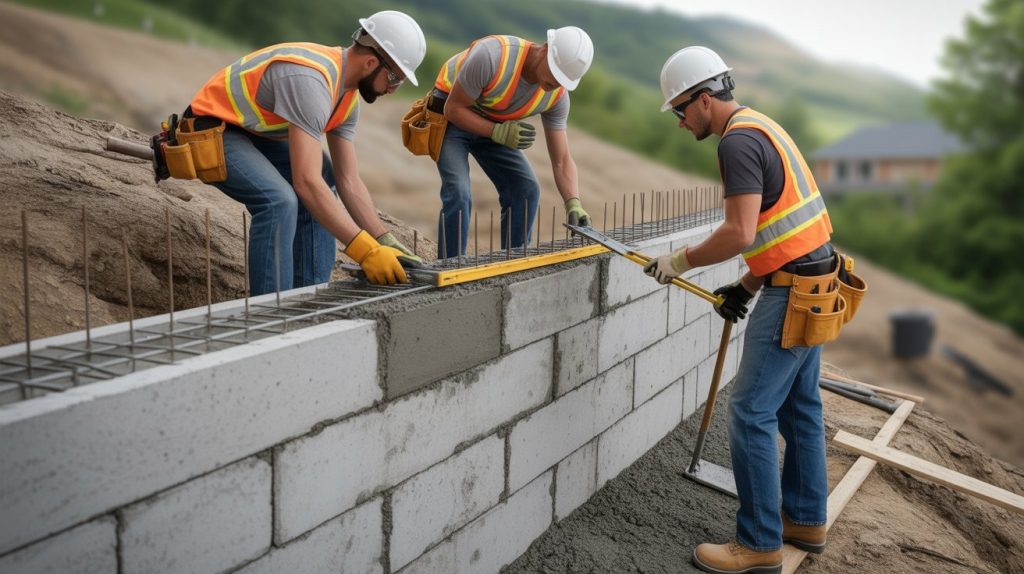
A concrete blocks retaining wall is commonly used in residential landscaping and light commercial projects. These systems offer modular flexibility and consistent strength when installed correctly.
Block retaining walls are ideal for:
- Garden terraces
- Driveway elevation support
- Property boundary reinforcement
While visually appealing, block systems still require professional alignment, reinforcement, and drainage planning to prevent shifting or collapse over time.
Risks and Limitations
Many property owners consider a diy concrete block retaining wall to save costs, but improper installation often leads to early failure. Without proper base preparation and drainage, even small walls can lean or crack within one to two seasons. Industry data shows that nearly 60 % of retaining wall failures are linked to poor foundation work and water pressure mismanagement. Professional contractors mitigate these risks through engineered construction practices.
Modern Concrete Retaining Wall Design Trends
A modern concrete retaining wall blends structural performance with contemporary design. Smooth finishes, integrated seating, layered heights, and minimalist textures are increasingly popular in residential and commercial developments. Modern walls often serve dual purposes by supporting land while enhancing outdoor aesthetics. Professional contractors use advanced forming techniques and finishing methods to deliver both strength and visual appeal. These walls are frequently incorporated into luxury homes, office complexes, and mixed-use developments.
The Importance of Concrete Foundation
Every retaining wall relies on a properly engineered concrete foundation for retaining wall support. The foundation anchors the structure and distributes loads evenly across the soil.
Foundation depth varies depending on:
- Wall height
- Soil type
- Load pressure
- Drainage conditions
A weak foundation results in settlement, cracking, and eventual wall failure, making this phase one of the most critical aspects of retaining wall construction.
Engineering Principles
A concrete foundation retaining wall system is designed to counteract soil pressure through mass, reinforcement, and footing depth. Steel reinforcement and compacted base layers improve resistance to movement and seasonal soil expansion.
Professional contractors follow engineering guidelines that ensure structural safety and code compliance, especially for walls exceeding four feet in height.
Textured Concrete Retaining Wall Finishes
A textured concrete retaining wall offers both durability and design flexibility. Textures such as stone patterns, brushed finishes, and stamped surfaces allow retaining walls to blend naturally into surrounding landscapes.
Textured finishes also improve surface resistance to weathering and staining. In commercial properties, these finishes enhance curb appeal while maintaining structural integrity.
Textured walls are commonly used in:
- Commercial plazas
- Residential developments
- Public infrastructure project
Concrete Retaining Wall Drainage and Water Management
Proper concrete retaining wall drainage is one of the most critical factors in wall longevity. Water buildup behind a retaining wall increases hydrostatic pressure, which is a leading cause of wall failure.
Professional drainage systems typically include:
- Gravel backfill
- Drainage pipes
- Weep holes
- Filter fabric layers
Studies in civil engineering show that walls with proper drainage systems last up to twice as long as those without adequate water management.
Why Hiring Professional Concrete Retaining Wall Contractors Matters
Experienced concrete retaining wall contractors bring technical knowledge, regulatory compliance, and construction precision to every project. They ensure proper excavation, reinforcement placement, drainage installation, and finishing.
Professional contractors also handle:
- Permit requirements
- Structural assessments
- Load calculations
- Long-term maintenance planning
This level of expertise protects property owners from costly repairs, safety risks, and structural failures.
Commercial and Residential Retaining Wall Applications
Retaining walls are widely used across residential and commercial environments. In residential projects, they support landscaping, driveways, and foundation protection. In commercial settings, retaining walls stabilize parking structures, roadways, and building perimeters. Commercial retaining walls must meet higher load standards and often involve larger-scale engineering solutions. Contractors experienced in both sectors deliver safer and more reliable outcomes.
Long-Term Value of Professionally Built Retaining Walls
Investing in professional retaining wall construction increases property durability, safety, and market value. Well-built walls reduce erosion, prevent foundation damage, and enhance usable space. Property owners who choose experienced contractors often avoid future repair costs that can exceed 40 % of original construction expenses when walls fail prematurely.
FAQs
What do concrete retaining wall contractors do?
They design and construct retaining walls that safely manage soil pressure, drainage, and structural loads.
Are concrete block retaining walls durable?
Yes, when professionally installed with proper foundation and drainage systems.
Why is drainage important for retaining walls?
Proper concrete retaining wall drainage prevents water buildup and structural failure.
Can I build a retaining wall myself?
A diy concrete block retaining wall may work for small projects, but professional construction is safer for long-term stability.
How long do concrete retaining walls last?
With professional construction and maintenance, retaining walls can last 40 to 70 years.
Conclusion
Choosing skilled concrete retaining wall contractors is essential for achieving long-lasting structural support and visual appeal. Professional expertise ensures safety, durability, and compliance. Whether avoiding the risks of a diy concrete block retaining wall or investing in a textured concrete retaining wall, experienced contractors deliver results that protect property value and structural integrity for decades.
