Concrete is one of those materials that people don’t think about until there is a problem. It supports your driveway, your patio and sometimes your kitchen floor as well. However, until a crack shows up or a stain won’t fade, most homeowners don’t pay it much attention. Residential concrete maintenance is the ideal solution at that point. With a few simple habits repeated over the years, your slabs can remain strong and safe for many years. This guide goes through what is working, what to look out for and when it may be time to call in a professional to handle the repairs instead of doing it on your own.
Why Residential Concrete Maintenance Deserves a Spot on Your To-Do List
The vast majority of people just think of the concrete and let it do its job. In fact, it requires maintenance like your roof or your HVAC system does. The careless treatment of the driveway will result in much heavier expenses down the road, as in the case of replacing your driveway, or in the case of a fractured interior floor, it’s a much heavier price to pay. Keeping it simple helps small problems remain small. It also helps to keep your home looking nice, as concrete surfaces are one of the first things people see when entering your home.
Driveways Take the Biggest Hit
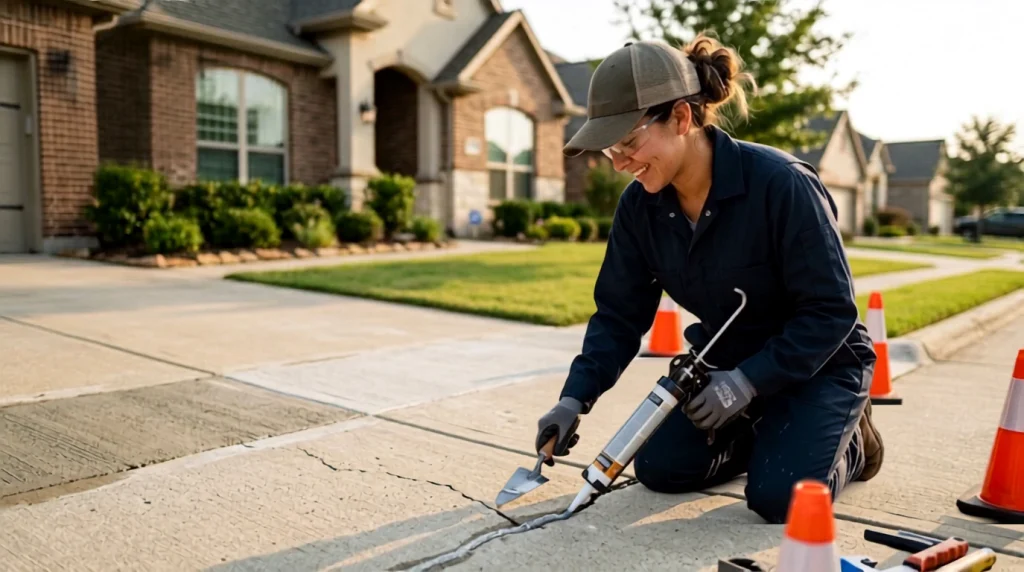
Residential concrete driveways are typically the hardest working of all of the concrete surfaces around a home. Fill in low areas with rain pools. Each winter, it’s the salt and ice melt that leaches at the surface. Without the action of expansion cracking, the cracks grow rapidly, and water penetrates below the slab. This is usually the reason for larger structural issues later on. A quick inspection of the season – particularly if there’s been a rough winter- can detect the problem early and prevent a large repair bill.
Warning Signs Worth Watching For
- Cracks that appear as hairlines and seem to get longer each month.
- Chipping or flaking around the edges of the slab
- Puddles that will not drain away after a rainstorm for hours.
- Chalky appearance following stormy weather
- Low or sunken areas close to the garage entrance area
Polished Concrete: A Style Worth Considering
Polished concrete residential floors may be worth considering if you are bored with dull, boring gray floors. The process polishes the surface until it is not only shiny, but nearly like natural stone. Works indoors and out and is more durable than most imagine. One of the things that homeowners say they did not expect with their residential concrete polishing is how easy it is to clean the floors after the job has been done. Dust and spills clean up in seconds, and there is no grout line to catch dirt as in tile floors.
Indoor Floors Need Love Too
Owners of residential properties who opt for a polished concrete floor tend to find it to be more resistant to scratches than hardwood floors, and it doesn’t require as many refinishing treatments as wood floors need over time. Sealing concrete inside every few years will prevent the stains from setting, whether it’s because of cooking oil, pets, or just human traffic.
Simple Ways to Protect Indoor Concrete
- Sweep or vacuum weekly to prevent damage to the surface from the grit
- Clean up spills immediately (particularly oil and wine)
- Place felt pads under heavy furniture legs
- Replace every 2-3 years contingent on foot traffic
- Do not use cleaners with high acids as they will, over time, decompose the sealant.
When Removal Is the Only Option
In some instances, a slab is too damaged to be patched or resurfaced. If the structural cracks are deep, the cracking is significant, or the house has suffered from water damage over the years, it just might be time for residential concrete removal. While it’s not ideal, adding new concrete to an already compromised foundation does not last long. A contractor who is honest about this is a good one to trust, as they will not mask a different temporary solution with a facade.
It’s a good idea to have some questions to ask about residential concrete resurfacing before jumping into the process of removal. This is often a much more cost-effective solution, and also has an additional advantage of extending the lifespan of the slab, still having a good foundation under it.
Questions to Ask Before You Commit to Removal
- Is it just surface deep or does it go to the base?
- What is the reasonable lifespan of the new slab?
- Does the contractor provide a written promise about the job?
Building a Maintenance Routine That Actually Sticks
The key to a good routine is not to be complicated. Clean residential concrete driveways weekly to remove the grit and prevent it from grinding into the surface. For those who have already bought residential concrete polishing, use a pH-neutral cleaner to maintain the shine. It’s often better to repair the slab regularly, without delay, rather than wait for a major crack to appear, and it is much cheaper over the lifespan of the slab.
Long-Term Habits Worth Building
- Reseal polished concrete residential floors every couple of years to keep the shine
- Watch interior residential concrete floors near water heaters and washing machines, where slow leaks often go unnoticed
- Schedule a professional inspection before winter if your slab is older than fifteen years
- Ask for photos of past jobs, whether it is a polished concrete floor residential upgrade or a full residential concrete removal project, before hiring anyone
Conclusion
Keeping your concrete in good condition doesn’t require major, costly work it mostly comes down to simple, regular practices done at the right time. Residential concrete maintenance isn’t so much about major, costly work but rather about simple, regular practices that are done at the required time. Rinse it, put it back in the container and watch when something seems amiss. From a driveway to a patio or a shiny floor within your house, getting caught early is always the more affordable course of action. Not to mention, when a slab is becoming old, keep in mind that residential concrete resurfacing might be a possibility long before removal is considered.
Frequently Asked Questions
How often should residential concrete maintenance happen?
Unless the driveway is used heavily, a seasonal check and complete reseal every 2-3 years will suffice.
Are the cracked, polished floors repairable?
Yes, it is possible to patch and re-grind some small amount of cracked sections of a polished floor, and not have to re-grind the whole thing.
Removal or resurfacing?
This will depend on the severity of the damage. The surface problems generally can be remedied, and structural issues require complete removal and a new pour.
When should I call in the professionals for my driveway?
If there are large cracks, areas that are sunken, or water that pools for several hours, it’s a good indicator that you should call in the professionals and not try to do it yourself.
