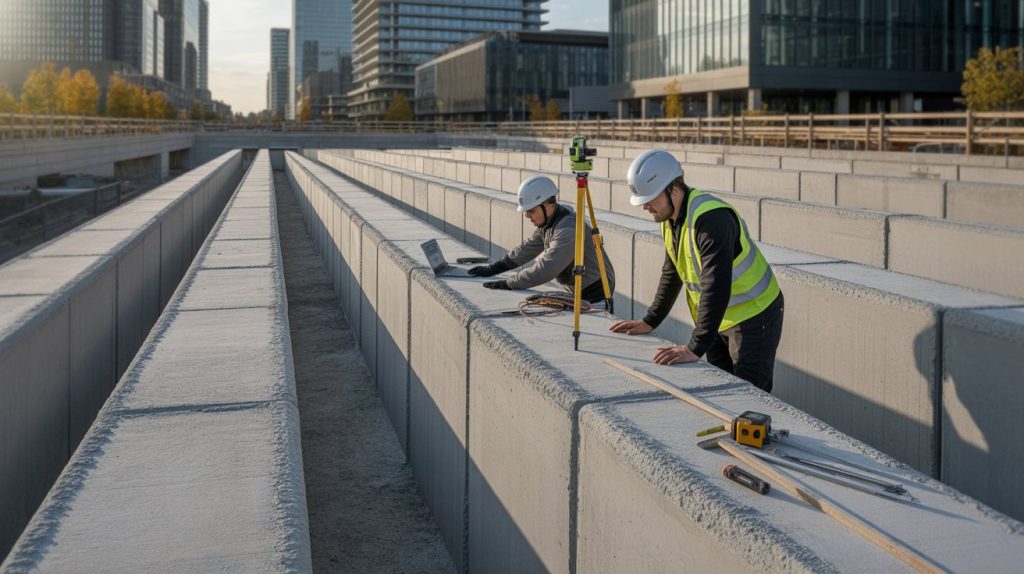
In modern cities where space is tight and every inch of land counts, retaining walls do much more than just hold back soil. They shape landscapes, define properties, and add beauty to urban spaces. When built right, a retaining wall can last a lifetime but when done poorly, it can collapse in a few years. That’s where skilled concrete retaining wall contractors make all the difference.
At Illice Concrete, we’ve learned one thing from years in the field: a retaining wall isn’t just about stacking blocks or pouring cement. It’s about engineering balance. Every wall has to handle the pressure of soil, rain, temperature changes, and sometimes even traffic vibrations.
So, whether you’re a homeowner looking to fix a sloped backyard or a developer building a new complex in the city, getting the right contractor means everything.
Why Concrete Retaining Walls Are the Backbone of Modern Landscaping
You might not notice them at first, but retaining walls are everywhere behind buildings, along parking lots, in parks, or supporting raised garden areas. They quietly do one of the hardest jobs in construction: holding back tons of earth safely.
A well-built retaining wall prevents erosion, improves drainage, and creates usable space where none existed before. And unlike wooden or steel structures, concrete walls have the advantage of longevity. They resist moisture, temperature shifts, and insects all while looking modern and clean.
Modern cities today prefer modern concrete retaining walls for another reason: aesthetic flexibility. You can mold, texture, or color them to match any design. They can be smooth, rugged, or even patterned to mimic stone.
The Importance of Hiring Professional Concrete Retaining Wall Contractors
Many people assume they can build a wall themselves after watching a few videos online. Sure, for small garden walls, a DIY concrete block retaining wall might work fine. But for larger builds anything that needs to hold serious weight or deal with heavy rainfall you need professional hands.
Here’s why experience matters:
- Structural Design: Every wall needs proper engineering calculations to resist soil pressure. It’s not about stacking blocks, it’s about balance.
- Foundation Precision: If the base isn’t leveled or compacted correctly, even the best wall will eventually tilt or crack.
- Drainage Setup: Poor concrete retaining wall drainage is the #1 reason most walls fail early. Professionals design systems that channel water away safely.
- Reinforcement and Backfill: Using the right reinforcement steel and compacted backfill ensures your wall can handle long-term stress.
At Illice Concrete, our crews handle everything from soil analysis to design, excavation, reinforcement, pouring, and finishing. We don’t just build walls; we build peace of mind.
Understanding the Concrete Foundation for Retaining Walls
Every strong wall starts with a strong foundation literally.
The concrete foundation for a retaining wall is what carries the entire load of the structure and the soil behind it. Think of it like a spine. If it’s weak or uneven, the whole wall will fail.
Here’s how we make sure that never happens:
- Site Preparation: We start by clearing and grading the ground to make sure the base is stable.
- Formwork Setup: Forms define the exact shape and alignment of the base.
- Reinforcement: Steel bars (rebar) are laid to strengthen the foundation.
- Pouring the Base: We pour high-strength concrete foundation retaining wall mix that resists shifting and water penetration.
- Curing: The concrete is given enough time to cure, not rushed, not forced because patience is key for lasting strength.
Many inexperienced builders skip curing or use a weak mix. We don’t. A wall is only as strong as what it stands on.
Different Styles of Concrete Retaining Walls
Every site has different needs. Some require heavy-duty retaining structures for steep slopes, while others just need decorative divisions for landscaping. Let’s break down a few types:
1. Gravity Walls
These rely entirely on their own weight to hold back soil. Ideal for small to mid-sized areas, they’re simple yet effective.
2. Cantilever Walls
One of the most popular designs for commercial projects, these walls use a base slab and stem that form an “L” shape, giving extra strength without using too much concrete.
3. Counterfort Walls
Similar to cantilever walls but with extra triangular supports (counterforts) behind them perfect for tall walls and heavy loads.
4. Textured Concrete Retaining Wall
These are designed for both beauty and strength. Using patterns, molds, and surface finishes, textured concrete retaining walls create a natural stone-like look that’s perfect for modern spaces.
5. Segmental Block Walls
These use pre-cast blocks that interlock, making them ideal for smaller DIY concrete block retaining wall projects though professionals still ensure proper base and drainage.
Designing for Modern Urban Builds
In urban environments, design isn’t just about function it’s also about how the wall looks. City developments demand retaining walls that blend seamlessly into architecture, walkways, and landscaping.
Our modern concrete retaining wall designs often feature clean lines, geometric forms, and minimal textures. We work with architects to match wall finishes with nearby building facades, ensuring the space looks polished and purposeful.
And when lighting and greenery are added like embedded LED strips or climbing plants a retaining wall becomes more than just support. It becomes a part of the city’s personality.
Drainage: The Hidden Hero of Every Retaining Wall
Ask any experienced builder what causes most retaining wall failures they’ll tell you it’s water. Without good concrete retaining wall drainage, trapped water adds pressure behind the wall until it cracks or collapses.
At Illice Concrete, we plan drainage from day one. Our process includes:
- Installing drainage pipes behind the wall to release trapped water.
- Using gravel backfill to allow easy water movement.
- Adding weep holes in taller walls to prevent water buildup.
It’s not fancy work, but it’s crucial. Proper drainage makes the difference between a wall that lasts 50 years and one that crumbles in five.
Can You Build a DIY Concrete Block Retaining Wall?
If you’re handy with tools and only need a small garden wall, yes a DIY concrete block retaining wall can be a fun and rewarding project.
But here’s the honest truth: once the wall is taller than 3 feet or holding back significant soil, it’s better to call professionals. One wrong measurement or poor compaction can lead to expensive repairs later.
Even for small jobs, we often help homeowners design and plan their DIY walls safely, making sure they have the right mix ratios, compaction methods, and drainage setup. It’s not about taking business, it’s about making sure every wall is safe.
Textured Concrete Retaining Walls: Beauty Meets Durability
Gone are the days when concrete walls had to look dull and gray. Modern techniques allow for textures, patterns, and stains that transform ordinary concrete into something artistic.
Textured concrete retaining walls can mimic natural stone, brick, or even wood but with much lower maintenance. They’re perfect for parks, driveways, commercial entrances, or backyard landscapes that need both strength and style.
At Illice Concrete, we use custom molds and finishing techniques to achieve a range of textures. Some clients want a rustic stone look, while others prefer sleek modern lines. Either way, the finish adds value and visual appeal without compromising structure.
Common Mistakes in Retaining Wall Construction (and How We Avoid Them)
- Ignoring Soil Type: Not all soils behave the same. Clay expands, sand drains fast. We always test and adapt the design.
- Poor Drainage: As said before, this is the most common killer of walls. We never skip proper drainage layers and weep holes.
- Weak Foundations: Rushed or uneven bases lead to tilting. We spend time preparing and leveling every inch.
- Overloading: Placing heavy objects near the top of a wall can cause stress cracks. We plan for load limits in the design phase.
- Skipping Reinforcement: Some contractors try to save costs by skipping rebar. That’s a shortcut that never ends well.
These are lessons learned from years of doing it right and fixing jobs done wrong by others.
How Illice Concrete Builds Walls That Last for Generations
We’ve earned our reputation as one of the most trusted concrete retaining wall contractors because we treat every wall like it’s our own.
Here’s how we work:
- Consultation and Site Visit: We don’t quote from photos. We inspect the site personally.
- Custom Design: We plan according to soil type, drainage, and height.
- Material Selection: We pick the right concrete mix and reinforcement.
- Excavation and Foundation Work: Done carefully to ensure a solid base.
- Pouring and Finishing: We handle every pour with precision, no shortcuts.
- Drainage Installation: Always part of our process.
- Final Inspection: We check alignment, strength, and surface quality before handing over.
This is why our walls stand strong, even after years of heavy rain, wind, and wear.
Choosing the Right Contractor: What to Look For
If you’re searching for top concrete retaining wall contractors, don’t just pick the first name online. Here’s what really matters:
- Experience with Local Conditions every region has different soil and weather behavior.
- Portfolio of Past Work looks for real projects, not stock photos.
- Honesty in Communication contractors who explain costs clearly are the ones you can trust.
- Warranty or Guarantee a confident contractor always stands behind their work.
- Safety Compliance the crew should follow all safety and inspection standards.
At Illice Concrete, we’ve built long-term trust by sticking to these principles on every single project.
The Future of Retaining Walls in Modern Cities
Urban design is evolving fast. Retaining walls aren’t just about holding soil anymore they’re part of the aesthetic identity of modern builds.
Architects now use modern concrete retaining walls as design features adding lighting, greenery, and artistic textures. Smart cities are even integrating rainwater collection and sustainability systems into wall designs.
As cities expand, the need for durable, stylish, and eco-friendly retaining walls is only going to grow.
And we’re proud to be at the front of that evolution.
Conclusion: Building Strength and Style, One Wall at a Time
At Illice Concrete, our mission is simple: to build retaining walls that outlast the test of time and look great doing it. We don’t just pour concrete; as concrete retaining wall contractors, we design, plan, and construct with passion, precision, and pride. Our walls don’t just stand; they define spaces, prevent erosion, and add value to modern architecture.
If you’re planning a new project big or small and want real professionals who understand what makes a wall last, contact us today.
Because when you choose Illice Concrete, you’re not just hiring contractors.
You’re partnering with builders who believe that every wall should stand tall for generations to come.
Frequently Asked Questions (FAQs)
1. What do concrete retaining wall contractors do?
Concrete retaining wall contractors specialize in designing, building, and reinforcing walls that hold back soil on sloped or uneven land. They handle excavation, drainage, concrete pouring, and finishing to ensure the wall’s strength, durability, and long lifespan.
2. Why should I hire professional concrete retaining wall contractors?
Hiring professionals ensures your wall is structurally sound, properly drained, and built to handle long-term pressure. Experienced contractors like Illice Concrete also follow engineering standards, preventing issues such as cracking, leaning, or collapse.
3. How long do concrete retaining walls last?
A well-built concrete retaining wall can last 50 years or more with proper drainage and maintenance. Using quality materials, reinforced steel, and expert installation techniques greatly extends its lifespan.
4. What is the best type of concrete retaining wall for urban areas?
For modern urban builds, cantilever and textured concrete retaining walls are most popular. They combine strength with sleek aesthetics, making them perfect for city landscapes, driveways, and commercial projects.
5. What is a concrete foundation for a retaining wall?
The concrete foundation supports the entire wall structure. It distributes weight evenly, resists soil pressure, and prevents tilting or shifting. Without a solid foundation, even well-designed walls can fail over time.
