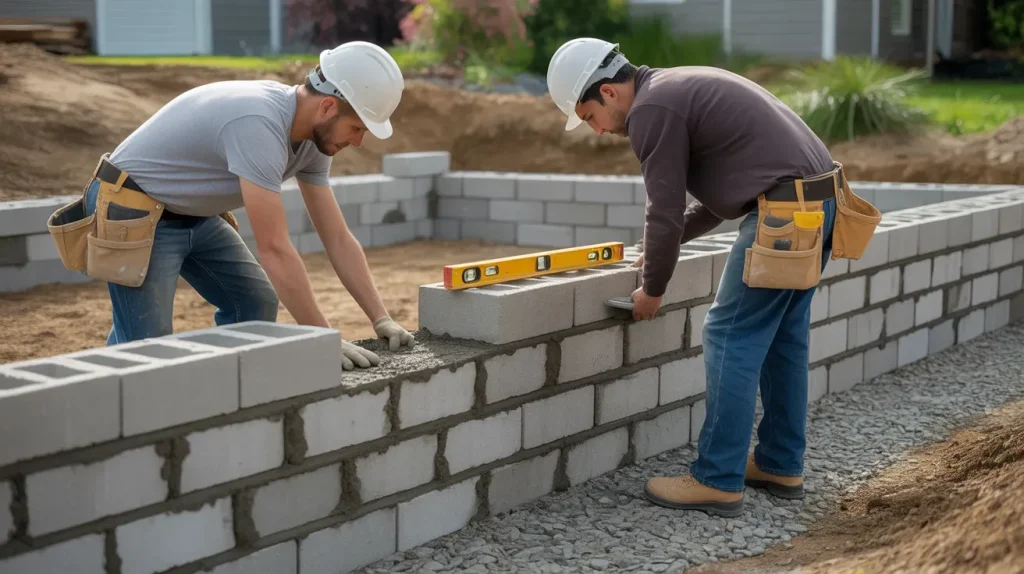
A retaining wall does a lot of heavy lifting for your yard. It controls erosion, flattens out sloped ground, creates usable outdoor space, and gives the whole landscape a sense of structure. And with the right prep and a clear plan, building a diy concrete block retaining wall is absolutely something a homeowner can take on. That said, it is not just a matter of stacking blocks and hoping for the best. The foundation, the drainage, and the block type each play a direct role in whether your wall is still standing in ten years or leaning by the second winter.
Is a DIY Concrete Block Retaining Wall the Right Move?
Before you order materials, be honest about the scope of the project. A wall under three feet tall on stable, relatively flat ground is a solid DIY candidate. Anything taller, on shifting soil, near a building foundation, or holding back a steep slope, is a different situation altogether. In those cases, bringing in concrete retaining wall contractors is not just the easier option; it is genuinely the safer one.
For the right project, though, going DIY saves real money and gives you total control over the design. Understanding the steps and the common pitfalls before you start is what puts you in a good position.
Building a Solid Concrete Foundation for Retaining Wall Projects
The leading reason retaining walls fail is a poor base. You can stack the blocks perfectly and still end up with a wall that shifts if the ground underneath is not prepared properly. A reliable concrete foundation for retaining wall construction starts with digging a trench at least six inches deep, filling it with compacted gravel, and making sure the first block course is partially buried below grade. That buried course is what keeps the wall anchored and resists forward movement over time.
Before you break ground, check these:
- Call your local utility service to get underground lines marked
- Find out if your area requires a permit for walls above a certain height
- Assess soil type; sandy or loose soil needs extra base depth
- Note where water currently flows across and around the slope
Picking the Right Concrete Blocks Retaining Wall Materials
Standard interlocking retaining wall blocks are engineered with a slight backward lean built in, called batter, that shifts the weight of the soil back into the wall rather than letting it push straight out from the front. When choosing concrete blocks retaining wall materials, look for blocks that are rated for the height you are building and designed for structural use, not just decorative garden edging.
Thinking about how it will look
If the appearance matters as much as the function, a textured concrete retaining wall block gives you a natural, stone-like finish without a significant cost increase. Most major manufacturers offer textured concrete retaining wall options that mimic split stone, rough slate, or weathered rock and blend into the yard far more naturally than a flat-faced block.
How to Build Your DIY Concrete Block Retaining Wall: Step by Step:
Step 1:
Excavate the trench to the correct depth and width for your base course.
Step 2:
Add and compact a gravel base layer, at least six inches for walls over two feet tall.
Step 3:
Set the first course of blocks perfectly level in all directions. This step cannot be rushed.
Step 4:
Install your drainage pipe along the base before you start backfilling.
Step 5:
Backfill behind each course with gravel as you go up, not all at once at the end.
Step 6:
Stagger the joints with every new course so vertical seams never line up.
Step 7:
Cap the top with a finishing block or cap stone for a clean, finished edge.
Do Not Overlook Concrete Retaining Wall Drainage
Water is the single biggest threat to any retaining wall. When it builds up in the soil behind the wall, the pressure it creates, called hydrostatic pressure, is far greater than most people expect. Without proper concrete retaining wall drainage, even a well-built wall will eventually bow, crack, or topple. A perforated drain pipe laid along the base and surrounded by clean gravel gives water a clear exit path before it ever gets a chance to accumulate.
When to Hand It Over to Concrete Retaining Wall Contractors
There are situations where a professional is simply the right call. Walls over three feet, sites near building foundations, ground that shifts seasonally, or projects that require permits, all benefit from the assessment and experience that qualified concrete retaining wall contractors bring to the job. A good contractor will also handle the permitting process, which in many areas is required for walls above a set height.
Conclusion
A properly planned diy concrete block retaining wall is one of the most satisfying projects a homeowner can complete on their own. Get the foundation solid, handle the drainage from the start, choose blocks that suit both the function and the look you are after, and work your way up one careful course at a time. The effort you put in at the beginning is exactly what determines how well the wall performs for years to come.
Frequently Asked Questions
-
How tall can a diy concrete block retaining wall be without professional help?
Most experts draw the line at three feet for DIY projects. Above that height, the structural and drainage requirements get complex enough that concrete retaining wall contractors should be involved from the start.
-
Do I need a permit to build a retaining wall?
In many areas, yes. Walls above two feet, especially near property lines or structures, often require a permit. Check with your local council or building authority before you start digging.
-
What is the right drainage setup for a retaining wall?
A perforated drain pipe along the base surrounded by clean gravel is the standard approach. Solid concrete retaining wall drainage is not optional; without it, water pressure will eventually push the wall over, regardless of how well it was built.
-
What is the difference between textured and modern retaining wall blocks?
A textured concrete retaining wall uses rough, stone-like faced blocks that blend naturally into garden settings. A modern concrete retaining wall uses smooth or poured finishes that suit contemporary architecture and clean landscape design.
-
How deep does the base need to be?
A minimum of six inches of compacted gravel with the first block course partially buried below grade. A proper concrete foundation retaining wall base is the single most important factor in keeping the wall from shifting forward over time.
