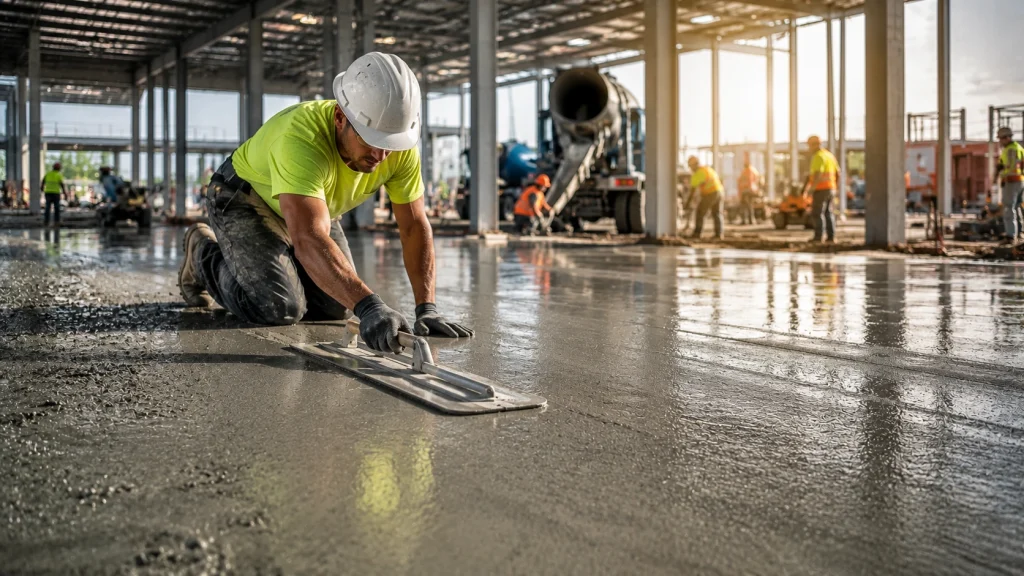
The oldest construction material which is known to man is concrete. It was heavily used by Romans to construct their buildings, which are still standing today. When your commercial concrete has a problem, it’s more than just an issue on the surface. That is a red flag that it’s not well. The right commercial concrete solutions solve the root problem. They aren’t simply slapping on a plaster and calling it a day. They keep your property safe, save the lives of your workers, and save you lots of money in the long run.
Why Commercial Concrete Solutions Matter More Than Most Owners Think
Many business owners only consider concrete when they have a break. By then, the damage is typically much more than it should be. Small cracks grow. Water gets in. The ground begins to move. The ground begins to move. After that, the repair bill increases. So, the most intelligent thing to do is to act quickly. Solving commercial concrete problems must be a good concrete solution, rather than a costly emergency.
Plus, your concrete reflects your business. Alternatively, polished and clean floors indicate that you mean business. The first impression is more influential than one thinks.
Starting From the Ground Up: Commercial Concrete Construction Projects
A good structure begins with a good foundation. This is particularly the case for commercial properties. Planning is critical for commercial concrete construction projects from the outset. If you skip those steps, you’ll end up paying the consequences later.
Moreover, commercial properties are different from residential properties. Concrete is under stress daily from forklifts, heavy pallets, delivery trucks and foot traffic. All of that is taken into account in good concrete construction for commercial projects at an initial stage.
The Floor Is the Foundation of Everything
Commercial Concrete Floor Coatings
The most common coatings are epoxy and polyurea. Both are tough. Both look great. And both extend the life of your floor by a number of years. In fact, a good coating can mean a substantial reduction in maintenance costs. This pays for itself quicker than most would think.
Commercial Polished Concrete Floors
Some businesses are looking for more than protection. They desire a floor that will impress. Commercial polished concrete floors are just what you need at that juncture. Polishing removes the surface to create a smooth and shiny surface. It leaves a clean, modern and surprisingly long-lasting finish. In addition, shiny floors reflect light better, which can even help to lower your lighting costs. This type of finish is ideal for retail stores, showrooms and offices. Additionally, it is low maintenance, which is an added advantage for hectic commercial spaces.
When Things Go Wrong: Repair and Crack Solutions
Commercial Concrete Crack Repair
Cracks are common. All the water penetrates and freezes in the winter. That ice will expand and cause the crack to widen. A little crack turns into a big problem. Commercial concrete crack repair breaks that cycle. Epoxy injection, polyurethane foam, and routing and sealing are the main methods used. The choice of the right one will depend on the type and size of the crack. The knowledgeable contractor will examine the damage and decide upon the most appropriate repair solution.
Commercial Concrete Repair Contractor
Not every contractor is familiar with commercial concrete. Residential work is not the same. Commercial jobs have more stringent tolerances. The consequences are greater as well. That’s why it’s important to hire the right commercial concrete repair contractor. Choose someone who has a track record of commercial experience. Request to view previous projects. A good contractor is transparent in their assessment and honest with you about the price. They don’t rush you or pressure you into doing more than you need to do.
Keeping It Clean and Strong Long Term
Commercial Concrete Systems and Extreme Commercial Concrete
Industrial and warehouse kitchens, loading docks and warehouse environments face heavy weight, high temperature, and chemical exposure daily. Under such circumstances, it is just not enough to make use of regular concrete. Commercial concrete systems for heavy use include reinforced slabs, special coatings, industrial-grade sealers, etc. The role of extreme commercial concrete mixtures is to be used in the most difficult situations. They set faster, cure stronger and are more pressure-resistant.
Conclusion
Good Concrete is not simply a “holding” material. It streamlines your business in a proper fashion, ensures its security and smooth working. From new construction projects to an old floor, the right commercial concrete solutions can make a difference. Act in time, select the right contractor and invest in good materials. It will benefit your building, your team, and your budget. A durable commercial concrete flooring system should be considered essential, not a luxury. They are just good business sense.
FAQ’s
Q: What are the most important commercial concrete solutions for a business property?
This is dependent on the property. The most frequent needs, however, are for crack repair, floor coatings, Commercial concrete cleaning, and structural concrete for new construction. A quality contractor will consider your space and discuss the appropriate commercial concrete solutions for your needs.
Q: How often should commercial concrete floors be cleaned?
Most commercial floors require a minimum of one or two times per year of commercial concrete cleaning. It might need to be used more frequently in high-traffic areas. To prolong the life of any floor coating or sealer, clean the floor regularly.
Q: What is the difference between polished concrete and coated concrete?
Polished concrete is a type of concrete that is smoothed and buffed. Coated concrete is concrete which is coated with a protective material, such as epoxy. They are two options for covering the floor, yet they appear different and work better in various rooms. A contractor can assist you in making a decision on which one your business needs
Q: How do I know if a concrete crack needs urgent repair?
If the crack is more than a quarter of an inch wide, if it is expanding or if water is entering the crack, it should be addressed immediately. Cracks that are smaller should also be monitored and sealed before winter to prevent the damage from freeze-thaw conditions from opening up the crack further. For commercial concrete systems and extreme commercial concrete needs, consult an expert.
