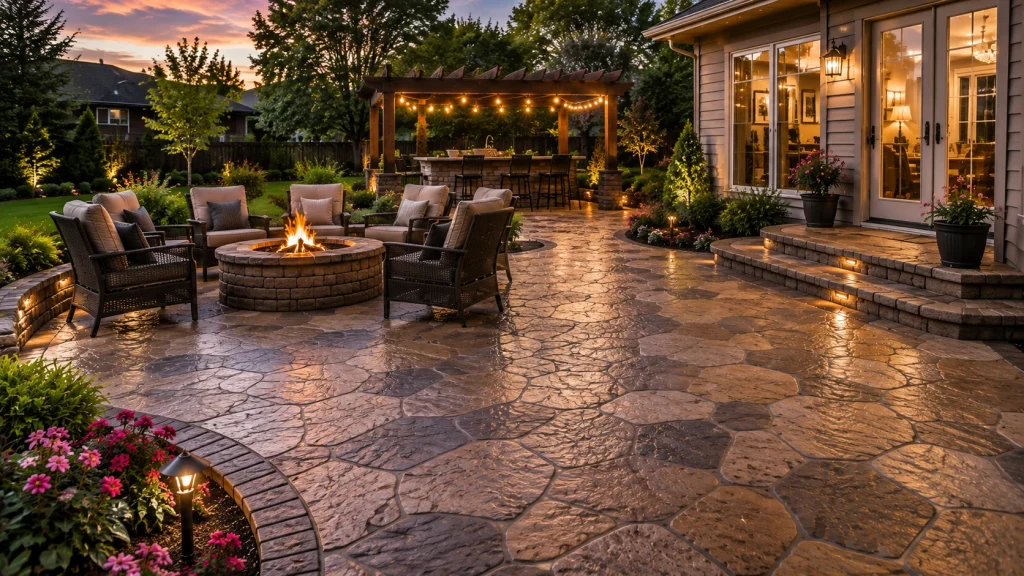
Picture a backyard that looks a little more finished. Maybe you saw a neighbor’s patio and thought, ” Wait, is that stone? Actually, it’s not. It’s concrete. So a stamped and stained concrete patio can copy that stone look for a lot less money. In fact, most people can’t even tell the difference.
But here’s the catch. Not every patio turns out great. Some crack. Others fade fast. So before you hire anyone, it helps to know what actually goes into a good one.
What Makes a Stamped and Stained Concrete Patio Work
A stamped and stained concrete patio isn’t just poured concrete with a pattern on top. Instead, it takes real steps, and skipping any of them causes problems.
First, the base needs prep. So bad soil work leads to shifting, and shifting leads to cracks. Next comes the pour. Timing matters a lot here, because crews need to stamp the concrete while it’s still soft, but not too wet either. Then color goes in. For example, some crews mix it into the concrete, while others apply it on top. Finally, sealer locks it all in.
Miss a step, and the whole patio suffers. Also, we’ve seen patios look great for six months, then start flaking because someone rushed the seal. Honestly, it’s frustrating. And it’s avoidable too.
Concrete Stamps Patio Patterns Worth Considering
There’s a wide range of concrete stamp patio options out there, so picking one comes down to the look you want. For instance, ashlar slate feels rustic, while running bond brick feels classic. Meanwhile, wood plank stamps, believe it or not, can look shockingly close to real wood.
Plus, you don’t have to stick with one texture. Instead, some homeowners mix a border pattern with a different pattern in the middle. That way, it adds depth, and it barely raises the cost. Also worth noting, larger patios often handle mixed patterns better than small ones, since there’s more room for the eye to separate each section.
Stamped Concrete Patio or Pavers: Which One Wins
This question comes up a lot. So, stamped concrete patio or pavers, which is better? Honestly, it depends on what you care about most.
On one hand, pavers offer easy spot repairs, since you can pull one out and swap it. However, pavers shift over time, especially where freeze-thaw cycles hit hard. Stamped concrete, on the other hand, goes down as one solid slab instead. Therefore, that means fewer weeds and a cleaner look overall, but a crack in one spot is harder to fix.
Cost usually favors concrete too, since pavers need more labor to install. So if budget matters, and for most people it does, stamped concrete often wins out in the end.
Working With Stamped Concrete Patio Contractors
Not all installers do this well, and that’s worth saying straight out. Good stamped concrete patio contractors understand timing. Also, they watch the weather closely. Plus, they know how different sealers hold up under sun and foot traffic. So even with great materials, a rushed job still fails.
At Illic Concrete, we’ve fixed more than a few patios where the first install just wasn’t done right. For example, bad stamp timing, thin sealer coats, or simply no drainage plan at all. So when you pick a contractor, ask about their process. Don’t just look at photos, because photos rarely show what’s underneath.
Sealing The Concrete Patio Surfaces the Right Way
Sealing stamped concrete patio surfaces isn’t a one-time job. Instead, it’s ongoing care, and that surprises a lot of homeowners. Basically, fresh sealer blocks UV rays, moisture, and daily wear from feet and furniture.
The type of stamped concrete patio sealer matters a lot here. For instance, acrylic sealers cost less and bring out color well. Meanwhile, polyurethane and epoxy sealers cost more, but they last longer in busy areas. Also, some sealers add grip, which helps a lot near pools or in wet climates.
Timing plays a role too. If you seal too soon, moisture gets trapped underneath. But if you seal too late, the surface sits exposed and weak. So getting that window right takes real experience, not a guess.
Resealing Stamped Concrete Patio Surfaces Over Time
Every patio needs a refresh eventually. So resealing surfaces usually happens every two to three years. However, busy patios or rough climates might need it sooner. Watch for dull color, water that stops beading, or a rough, chalky feel underfoot.
The good news? Resealing takes far less work than the first install. Often, it just means a good clean, small crack fixes if needed, and a fresh coat on top. So some homeowners handle it themselves over a weekend. Still, many call a pro to avoid patchy coverage, especially on larger patios where even coverage gets tricky fast.
A Few Small Things That Make a Big Difference
Beyond the big steps, a few small details tend to separate a great patio from an average one. For example, edge detailing around the border often gets overlooked, yet it frames the whole space nicely. Also, drainage slope matters more than most people realize, since flat patios pool water after heavy rain. And finally, lighting placement, even something simple like a few low path lights, can make an evening patio feel like a completely different space. So while these details seem minor, they often end up being what homeowners notice and appreciate most once the project wraps up.
Final Thoughts
A well-built patio adds real value to your home. Honestly, it’s one of those upgrades people notice right away. Maybe you want the look of stone without the price tag. Or maybe you just want something low-maintenance that still looks sharp. Either way, a stamped and stained concrete patio checks a lot of boxes.
If you’re weighing your options, talk to someone who’s installed a few hundred of these. At Illic Concrete, we’re happy to walk through patterns, sealers, and what fits your yard and your budget. No pressure. Just a real conversation about your space.
FAQs
How long does a stamped and stained concrete patio last?
With proper sealing and upkeep, most patios last 25 years or more. However, the sealer itself needs a refresh every few years to keep working well.
Is a stamped and stained concrete patio slippery when wet?
It can be, depending on the sealer. So many contractors add grip additives, especially for patios near pools or in rainy areas.
How much does it cost to hire stamped concrete patio contractors?
Cost depends on square footage, pattern choice, and coloring method. So getting a few quotes usually beats guessing at a flat number.
Can I reseal my patio myself?
Sometimes, yes, especially for small patios with light wear. But bigger cracks or heavy fading usually turn out better with a pro.
