Got a slope that won’t behave? You’re not alone. Soil erosion. Water runoff. A messy yard. It’s a common problem. And it’s a frustrating one. So a lot of homeowners start looking into concrete retaining wall contractors once quick fixes stop working.
Here’s the thing. A wall isn’t just for looks. It holds back soil. It controls water. And it keeps your home’s foundation safe. So getting the build right really matters.
Why Concrete Retaining Wall Contractors Matter More Than You’d Think
Building a wall sounds easy. Stack some blocks, done, right? Not quite. Soil pushes hard. Water adds weight. And frost shifts things over time. So walls fail more than people expect, especially ones built without much thought.
That’s where concrete retaining wall contractors earn their keep. They know how to plan for load. They know how to plan for drainage. And they know local codes most homeowners never think about. Plus, they can spot small problems early, like a bulge or a small crack, before things get worse.
Sure, a weak wall might hold up fine for a year or two. But it won’t last. And by then, fixing it costs a lot more than doing it right the first time.
Concrete Blocks Retaining Wall Options
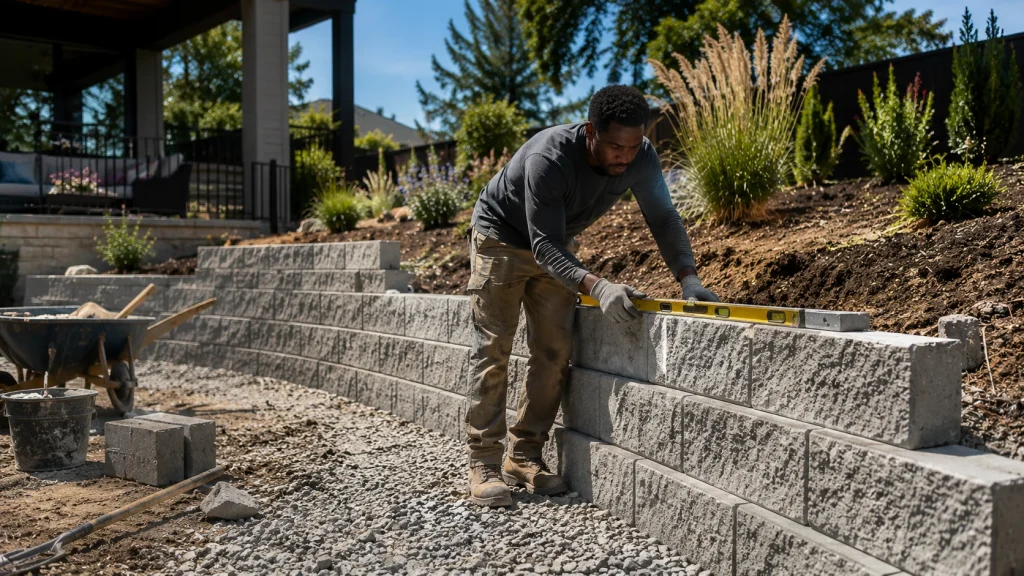
Many homeowners go with a concrete block retaining wall. Why? The blocks lock together. No mortar needed. That makes the build faster. It also makes repairs easier down the road. Plus, the blocks come in many colors and textures. So you’re not stuck with one look.
Because the system is modular, contractors can adjust the height with ease. They can also curve the wall to fit an odd yard shape. That’s why block walls stay so popular, big or small.
Picking a Style That Fits Your Home
Your wall doesn’t just have to work. It can look good too. Why not both?
Creative Modern Concrete Retaining Wall Styles
A modern concrete retaining wall leans into clean lines. It has a smooth, simple finish. It pairs well with modern landscaping. Think tall grasses. Think sharp planting beds. So if your home already feels modern, this style fits right in.
Textured Concrete Retaining Wall Finishes
On the other hand, a textured concrete retaining wall adds warmth. It can copy the look of stone or wood. But it costs less. So if you want more character in your yard, ask your contractor about texture early on. It’s a small choice. But it changes the whole look of the wall.
The Foundation Matters More Than People Think
Here’s something a lot of people miss. The wall isn’t the hard part. The concrete foundation for retaining wall work is what decides if the wall lasts for decades or starts to lean in just a few years.
A solid concrete foundation retaining wall setup needs a packed base. It also needs the right depth below the frost line. Plus, it needs support that matches the wall’s height. Skip any of that, and you’re taking a big risk with your yard. Because soil shifts over time, a weak base almost always leads to cracks or leaning. It’s just a matter of time.
Soil type matters too. Sandy soil drains fast, but it shifts easily. Clay soil holds water, and it swells when wet. So a good contractor won’t just pour a standard base. Instead, they’ll test the soil first. Then they’ll adjust the depth and support to match. Skip that step, and your wall could lean sooner than you think.
Concrete retaining wall drainage matters just as much. Without it, water builds up behind the wall. That adds pressure the concrete was never built to handle. Good drainage often means gravel behind the wall, so water can pass through instead of pooling. It also means a drain pipe to carry water away. And weep holes along the base add extra relief. Skip these steps, and you’ll likely face costly repairs down the road.
DIY vs Hiring a Pro
It’s tempting to save money and do it yourself. And for small jobs, that’s often fine. A diy concrete block retaining wall under two feet, with no major drainage needs, can be a fair weekend project if you’re handy.
But once you’re dealing with tall walls, steep yards, or heavy soil, the risk goes up fast. A mistake at that scale isn’t just ugly. It can mean a collapse or real property damage. So while DIY has its place, bigger jobs often call for a pro.
The National Concrete Masonry Association notes that solid engineering and drainage design play a key role in how long a wall lasts, especially for taller walls.
Final Thoughts
A well-built retaining wall does more than hold back dirt. It protects your yard. It protects your foundation. And it gives you peace of mind when it rains hard. Whether you like a sleek modern look or something with more texture, working with skilled concrete retaining wall contractors means your wall gets built to handle real pressure. Not just to look nice on day one.
So if you’re planning a project like this, don’t guess your way through it. Instead, talk to a solid team. Walk your site with them. And build a plan around your slope, your soil, and your style. A quick chat now can save you years of trouble later.
FAQs
How long does a concrete retaining wall usually last?
With good drainage and a solid base, most walls last 40 to 50 years, sometimes longer. But poor drainage can cut that down fast.
Do I need a permit to build one?
It depends on where you live. Many areas need a permit once a wall passes a certain height, often three or four feet. So check with your local building office first.
What does it cost to hire concrete retaining wall contractors?
Cost varies a lot based on wall height, materials, and your site. So it’s smart to get a few quotes before you pick a team.
Can an old wall be fixed instead of rebuilt?
Often, yes. Small cracks or a slight lean can usually be fixed. But if there’s major damage, a full rebuild is usually safer in the long run.
